

Integrated Door Ring Hot Forming Technology: One Loop Instead of a Welded Puzzle
Date: 2026-10-15 09:40:06 Author: Haoxinran Views: 86 times
The door ring, the frame around the door opening, used to be a puzzle of several stamped pieces welded together. Each joint was a potential weak point and a weight penalty. The integrated door ring changes that by forming one continuous, hot-stamped loop. At Haoxinran we see this part as a clear example of where press hardening and smart blank design meet, and the reasons behind the shift are worth understanding if you specify body structure.
The Shift to Single-Piece Door Rings
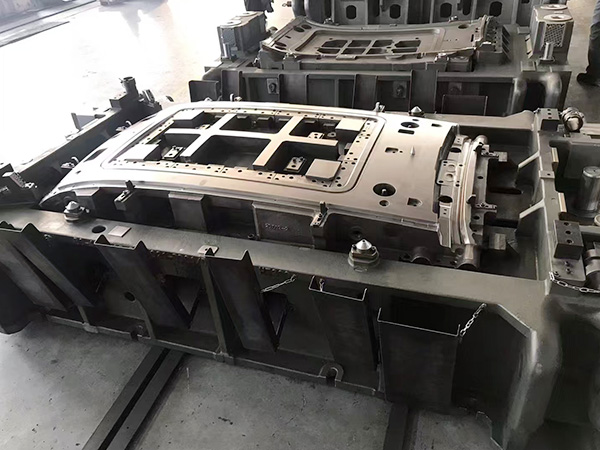
Consolidating the door ring into one part removes welds, fixtures, and the tolerance stack-up those welds introduce. Fewer joints means fewer places for corrosion and fatigue to start, and the assembly is stiffer as a result. For the body shop it is also simpler: one part locates into the body instead of a jigsaw of sub-components. The trade is that the die and the blank are more demanding to get right.
How Hot Forming Enables the Shape
A door ring has varying section demands around its loop, thicker where a side-impact load enters, thinner where weight can be saved. Hot forming lets a single blank become that shaped part while ending at 1500 MPa class strength. The tool holds the geometry through the quench, so the ring comes out dimensionally stable. Cold forming the same loop from ultra-high-strength steel would be impractical, because the material would fight every bend.
Tailor-Welded Blanks and Thickness Variation
The trick that makes the ring efficient is the tailor-welded blank. Different thicknesses and sometimes different grades of sheet are laser-welded into one blank before forming. The die then shapes the whole thing in one hit. Getting the weld to survive the hot stamping cycle without becoming a weak line takes careful control of heat and forming load, but the payoff is a part that carries load exactly where engineered.
Crash Energy Management
In a side impact the door ring is a primary load path. A continuous ultra-high-strength loop resists intrusion far better than a welded assembly, because there is no seam to open. Crash engineers like the predictability: the ring behaves the same way every time, which makes simulation and certification cleaner. That consistency is a quiet but large advantage over multi-piece designs.
Weight and Cost Trade-offs
The ring saves mass by putting strength only where needed, which helps fuel economy and electric range. The cost story is more nuanced. The die and the laser-welded blank cost more up front, but the saving on welding, fixtures, and warranty claims for joint failures often balances it in high-volume programs. Low-volume vehicles may not clear that threshold, which is why not every platform has switched.
Manufacturing Challenges
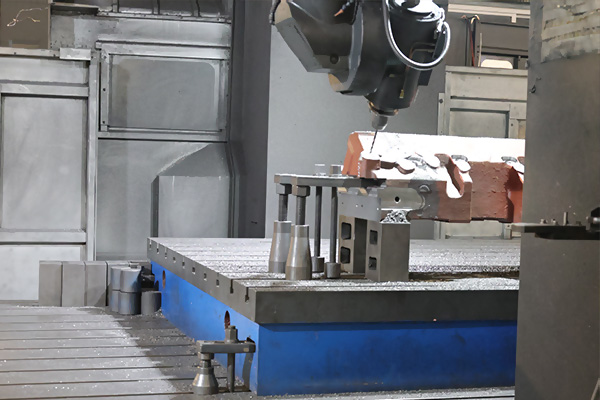
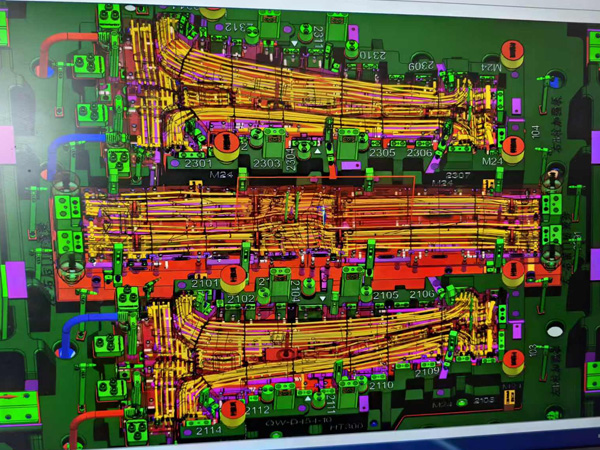
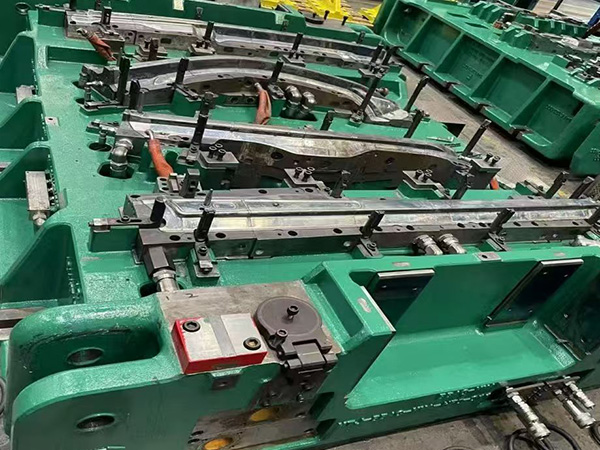
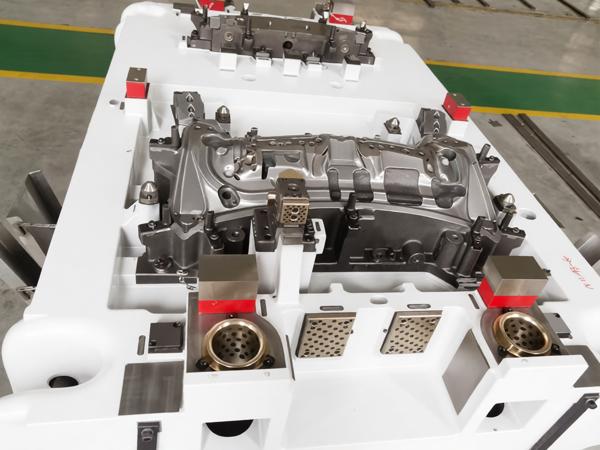
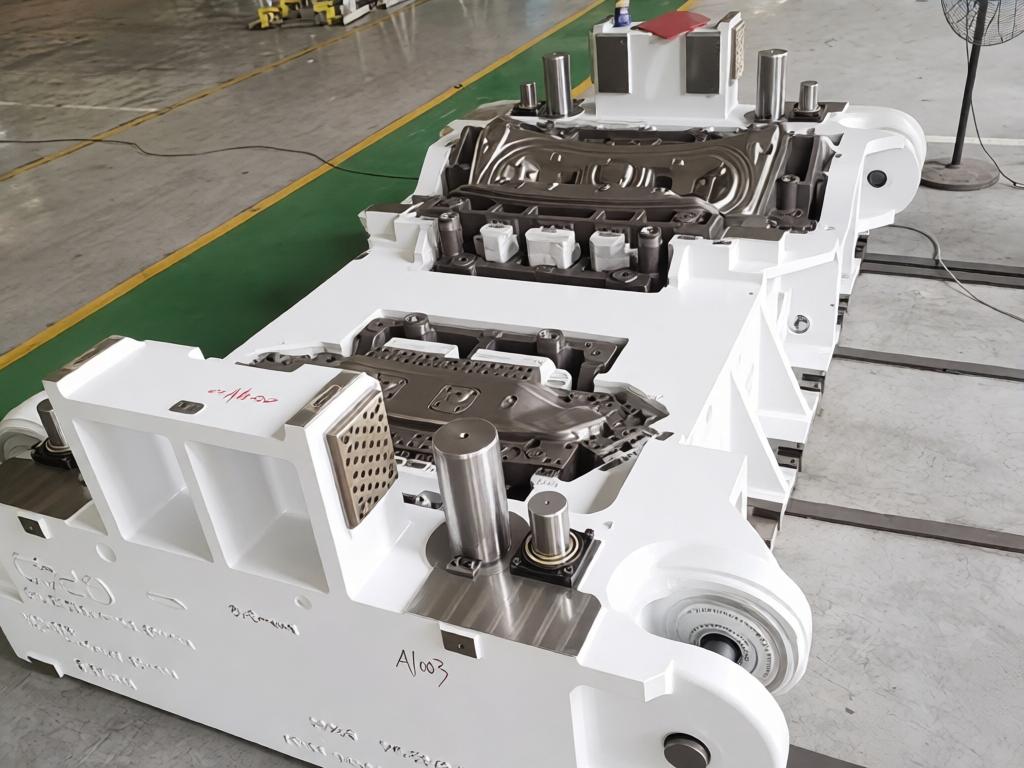
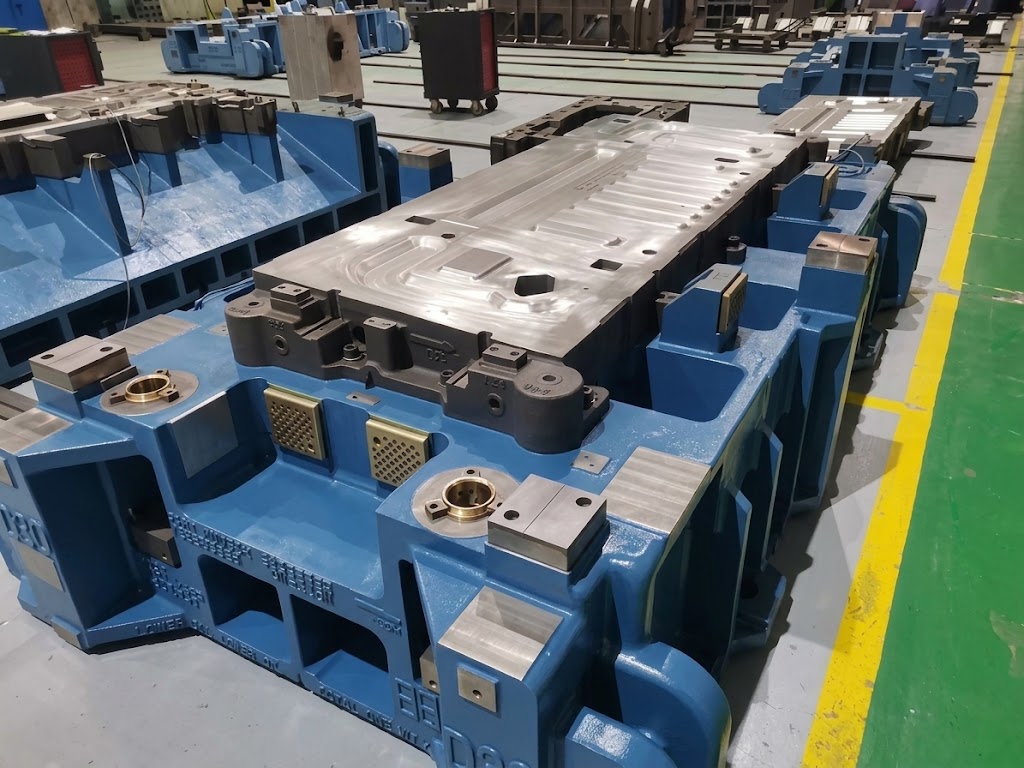
Running an integrated ring is not trivial. The blank must be positioned precisely, the cooling must be uniform around a long, thin loop, and distortion after the quench has to be controlled. Die makers spend real effort on the binder and on channel layout so one section does not harden faster than its neighbor. Trial runs focus heavily on dimensional scatter at the weld zone.
Outlook
As platforms push for lighter bodies and tougher crash scores, the integrated door ring looks less like an experiment and more like a standard solution. Expect the blank designs to get more varied and the dies to get smarter about cooling. For suppliers, the barrier to entry is real tooling competence, not the concept itself.
Simulation Before Steel Is Cut
Because the integrated door ring is unforgiving, development starts in simulation. Forming and quenching are modeled together so the cooling layout is settled early, and the laser-welded blank is checked for weld-line movement during the draw. The first physical tryout then confirms the model instead of inventing the process on the press. This front-loaded work shortens the overall program even though it adds engineering hours up front, and it is what lets a long, thin loop harden evenly rather than fighting hot spots later.
Die Development Cycle
The cycle runs through blank definition, formability simulation, cooling design, machining, and a trial phase focused on dimensional scatter at the weld zone. Teams that skip simulation usually pay for it in extra tryout iterations, where every week on a press costs more than the modeling that would have prevented the rework. Getting the binder and channel layout right the first time is what separates a smooth launch from a painful one, and it is the part of the job that rewards experience over improvisation.
References
WorldAutoSteel, Tailor-Welded Blank Applications in Body Structures
SAE International, Integrated Door Ring Design for Side-Impact Performance
Steel Research International, Laser Welding of Boron Steels for Hot Stamping
American Iron and Steel Institute, Lightweighting with Advanced High-Strength Steel