

- Site Navigation -

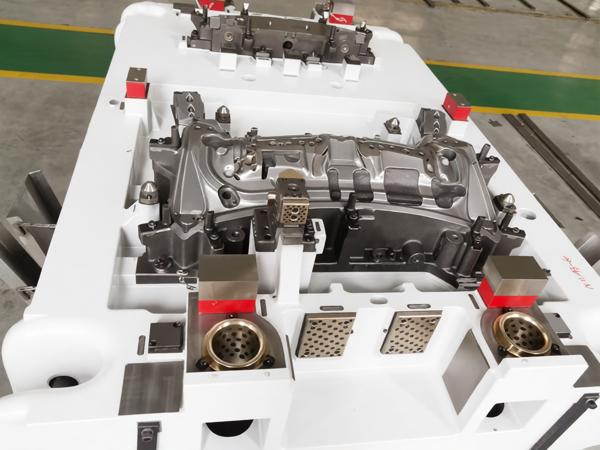
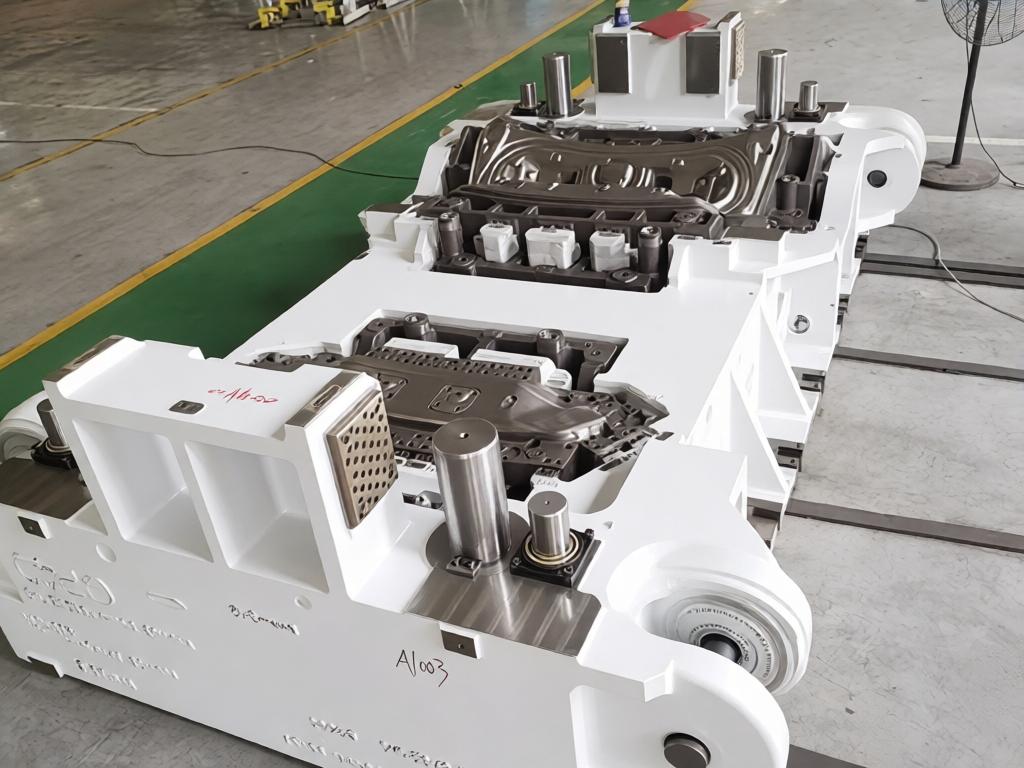
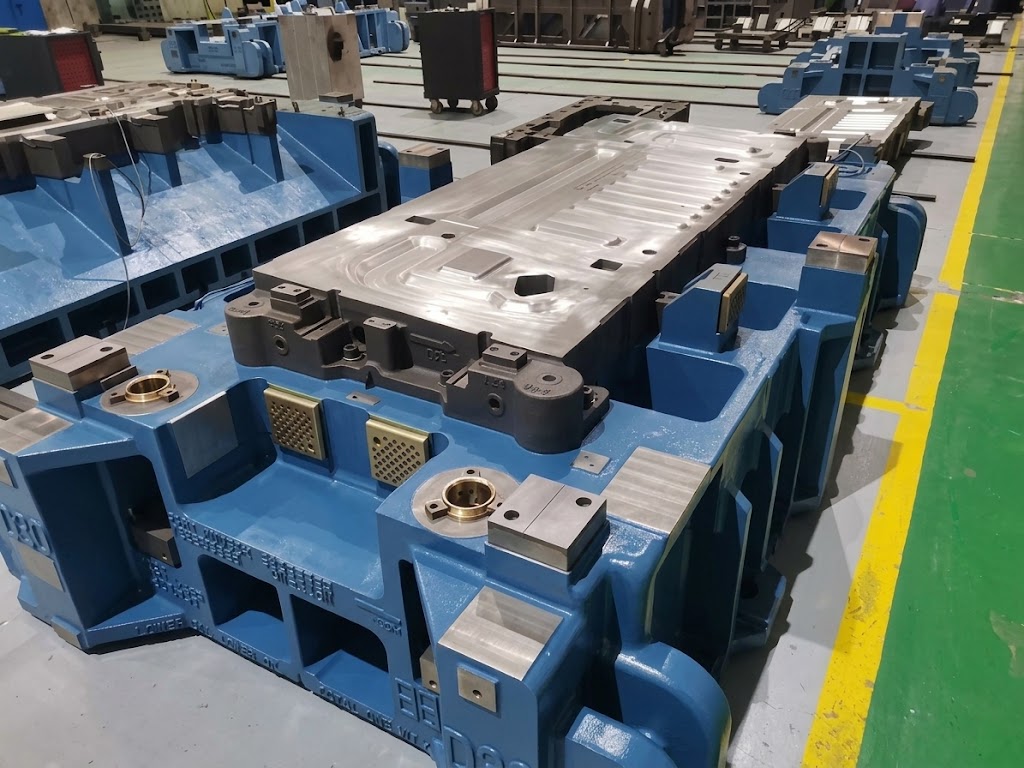
Springback Control in Automotive Cold Stamping Dies: Causes and Solutions
Date: 2026-09-21 10:58:23 Author: Haoxinran Views: 137 times
Springback Control in Automotive Cold Stamping Dies
Springback represents one of the most persistent and challenging issues in automotive cold stamping, directly affecting dimensional accuracy and assembly fit. As an elastic recovery phenomenon after forming, springback causes stamped components to deviate from intended geometry, requiring careful control in die design and process optimization. This document provides comprehensive analysis of springback mechanisms, prediction methods, and effective control strategies for automotive cold stamping applications.
Springback Fundamentals
1. Physical Mechanism
Springback occurs due to non-uniform stress distribution through the material thickness after forming. During stamping, outer surfaces experience tensile stresses while inner surfaces develop compressive stresses. When the tool is removed, elastic recovery causes the material to partially return toward its original shape, resulting in dimensional deviation from the tool geometry.
2. Factors Influencing Springback
Springback magnitude depends on multiple material and process factors:
Material yield strength and elastic modulus
Material thickness and part geometry
Strain hardening behavior and material anisotropy
Forming operation type and severity
Blank holder force and process parameters
Die geometry and radius dimensions
3. Springback Forms
Springback manifests in several characteristic forms:
Angular springback: Angle change in bent or flanged sections
Curvature springback: Radius change in curved sections
Wall curl: Curvature deviation in vertical walls
Twisting: Torsional deformation of complex shapes
Springback Prediction Methods
Analytical Prediction
Classical analytical models use beam bending theory to predict springback for simple geometries. These models provide fundamental understanding but have limited accuracy for complex automotive components.
Numerical Simulation
Finite element simulation provides detailed springback prediction capabilities for complex geometries. Modern simulation tools accurately model material behavior, stress distribution, and elastic recovery, enabling reliable springback prediction before die construction.
Experimental Measurement
Physical tryout and measurement provide validation of predicted springback. Coordinate measuring machines and optical scanning systems measure actual part geometry and compare it against design intent.
Springback Control Strategies
Geometric Compensation
Geometric compensation modifies die surface geometry to counteract predicted springback. The iterative compensation process adjusts die surfaces based on simulation predictions and physical tryout results, achieving final part dimensions within specification.
Over-Forming Techniques
Over-forming intentionally forms material beyond the desired geometry so that springback brings it back to the target dimensions. This approach is particularly effective for angular springback control in bending operations.
Process Parameter Optimization
Process adjustments can reduce springback magnitude:
Increased blank holder force to promote uniform stretching
Optimized draw bead placement and geometry
Enhanced material stretching through process modifications
Controlled friction conditions for consistent material flow
Multi-Operation Approach
Multi-stage forming operations with progressive restriking provide effective springback control. Each operation progressively corrects springback effects, achieving final dimensional accuracy through iterative refinement.
Material Considerations
Material selection significantly influences springback behavior. High-strength steels exhibit greater springback due to higher yield strengths and larger elastic recovery strains. Material selection decisions must balance strength requirements against springback control challenges.
Conclusion
Effective springback control requires combination of accurate prediction, thoughtful die design, and careful process optimization. By applying the strategies outlined in this document, manufacturers can achieve the dimensional accuracy required for automotive cold stamping applications.
References
Springback Prediction and Control - Engineering Research Publications
Sheet Metal Forming Mechanics - Material Science Textbooks
CAE Simulation for Springback Analysis - Engineering Software Guidelines
Dimensional Control in Stamping Production - Quality Engineering Standards

Contact Us
- Company Name: Hebei Haoxinran Machinery Manufacturing Co.,Ltd.
- Hotline: +86 18932785670
- Email: project@haoranmj.com
- Website: https://www.hxrmetal.com
- Address: Across from Sanjing Distillery on Road 4, Botou Economic Development Zone, Cangzhou City, Hebei Province


Copyright © 2026-2027 https://www.hxrmetal.com. All Rights Reserved. Hebei Haoxinran Machinery Manufacturing Co.,Ltd.