

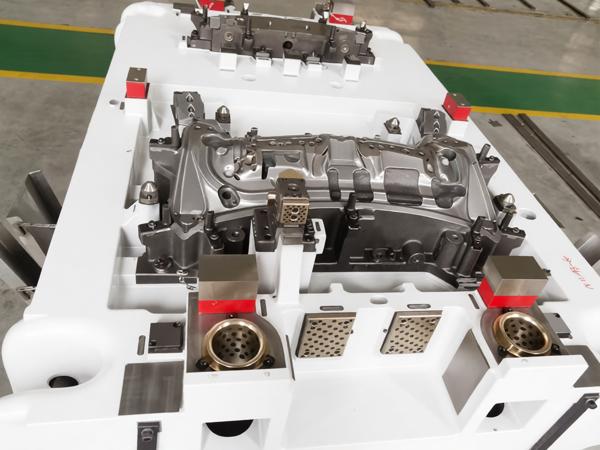
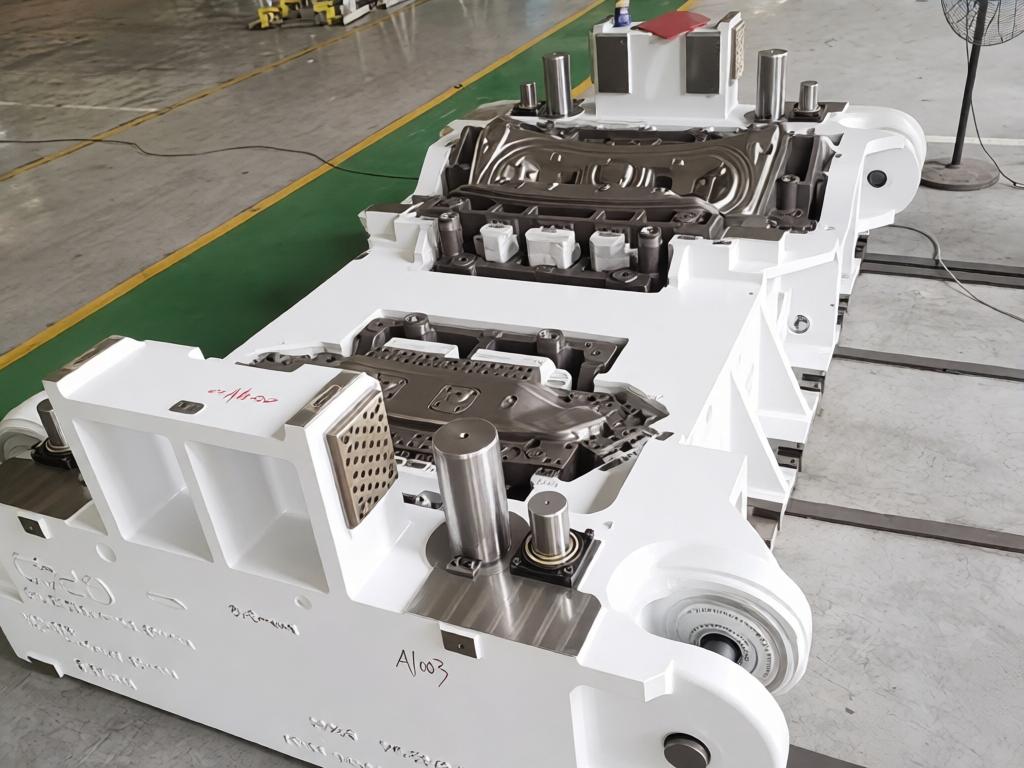
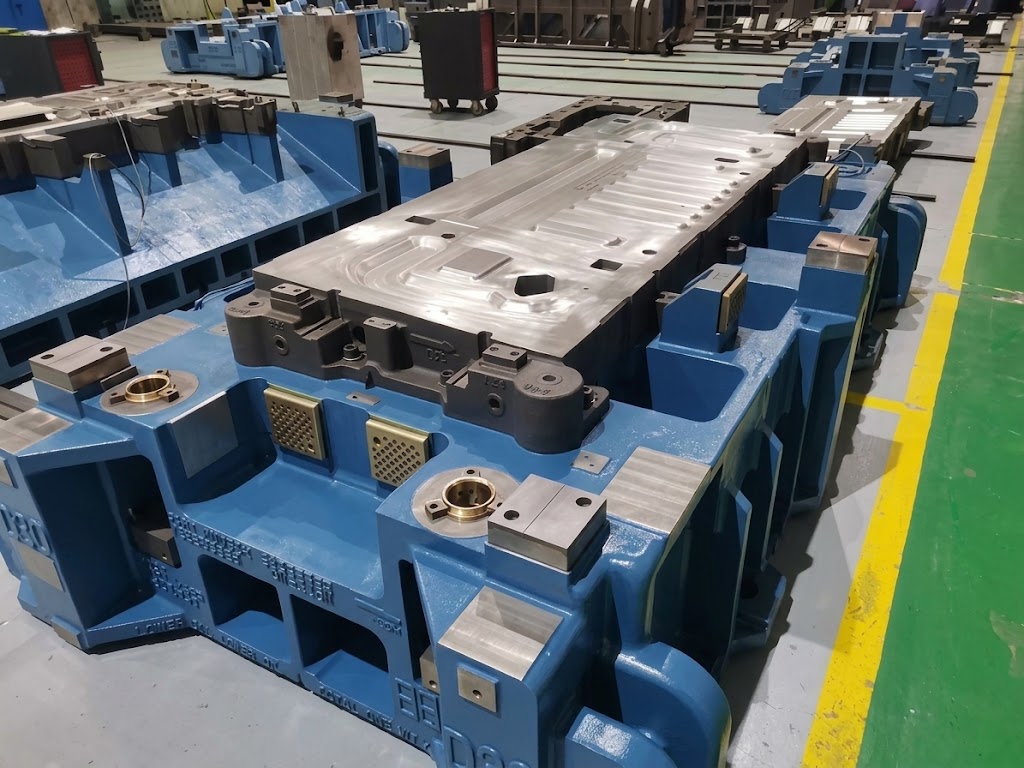
Reliable Hot Stamping Dies Manufacturer for Automotive Body Structural Parts
Date: 2026-11-03 08:40:51 Author: Haoxinran Views: 89 times
Selecting a hot stamping dies manufacturer is rarely a simple purchasing decision. In modern vehicle programmes, the tooling that forms automotive body structural parts determines whether a safety component reaches its designed strength, holds its geometry, and stays stable over hundreds of thousands of production cycles. The real trade-off is not between the cheapest die and the most expensive one, but between short-term tooling savings and the long-term risk of dimensional drift, low yield and unplanned line stoppages. A professional press hardening tooling partner works from material behaviour backwards: understanding how the blank heats, transfers, forms and quenches before a single block of tool steel is cut.
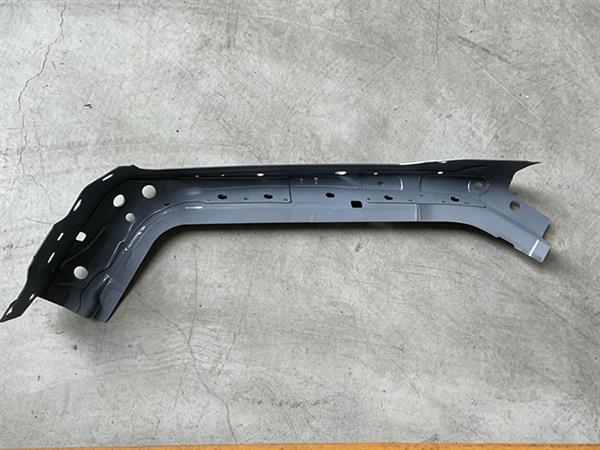
Why hot stamping tooling is different from conventional stamping tooling
Hot stamping, also described as press hardening, forms boron-alloyed steel at austenitising temperature and then quenches it inside the closed tool. The die is therefore not only a forming device; it is also a heat exchanger. This single fact changes almost every design rule. Where a conventional cold tool cares mainly about draw depth, material flow and springback, a hot stamping die must simultaneously control forming accuracy and the cooling rate that creates the martensitic structure. If the cooling rate drops below the critical threshold, the part leaves the press soft and the whole safety concept of the body structure is compromised.
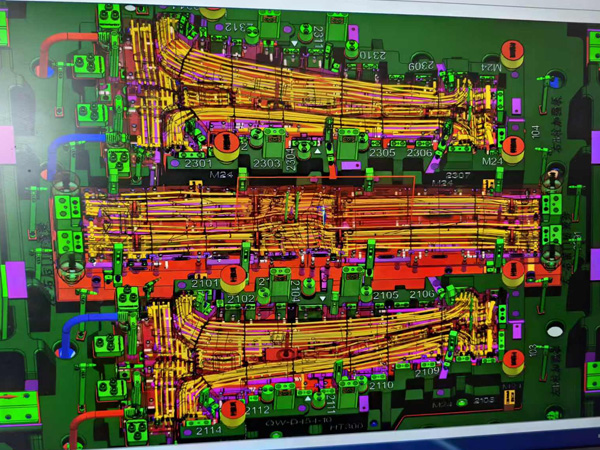
For that reason, the tooling must deliver a stable and repeatable thermal field across the whole working surface. Cooling channels are laid out according to local heat load rather than evenly spaced by convenience, and the distance from channel to cavity surface is kept consistent so that no zone becomes a slow-cooling hot spot. A reliable manufacturer treats thermal balance as a first-class design parameter, not as a detail to be corrected during tryout.
From process window to die design
A practical tooling programme starts from the process window defined by the steel grade and part geometry. Blank thickness, coating type, furnace soak time, transfer time and press closing speed all interact. Heating the blank to roughly 900 °C and transferring it quickly limits heat loss before forming, while the forming stroke must be completed before the martensitic transformation begins. The die design then translates these constraints into tangible features:
Cavity and punch geometry developed with forming simulation to predict thinning, wrinkling and local contact pressure.
Cooling circuit layout dimensioned for the target quench rate, with separate control where the part has thick and thin sections.
Guiding and wear systems selected for high-temperature duty, because thermal expansion changes clearances compared with cold tooling.
Handling and automation interfaces that keep transfer time short and repeatable from cycle to cycle.
Material selection for hot stamping die components
Die materials for press hardening face abrasion from hot, scaled or coated surfaces, thermal fatigue from repeated heating and cooling, and mechanical load at closing. A competent hot stamping dies manufacturer does not specify one steel for the entire tool. Cavity inserts, cutting sections and structural plates are matched to their specific duty: high thermal conductivity and hot-wear resistance where the blank is quenched, toughness and dimensional stability in the supporting structure. Heat treatment, surface condition and, where justified, coating or nitriding are combined to slow down the two dominant wear mechanisms — abrasive polishing of the cavity and thermal cracking at geometric stress concentrators.
Dimensional control and validation
Geometric accuracy is the metric that most often decides whether a hot stamping tool is accepted. Thermal growth during production means that room-temperature measurement alone is not enough; the tooling is validated under realistic thermal conditions, and compensation is built into the cavity. Modern programmes combine 3D scanning of trial parts, simulation of springback and quench distortion, and statistical checks over a production run. A dependable manufacturer records these results, tunes the tool, and only then confirms capability. The outcome the customer actually buys is not a block of steel, but a documented, repeatable process.
What to look for in a hot stamping dies supplier
When evaluating suppliers, look beyond quoted price and ask how the tooling will behave in year three of production. Useful questions include: How is cooling balance simulated before manufacturing? What die steel and heat treatment are proposed for each functional area? How is dimensional capability measured and reported? Is there in-house tryout capacity to iterate before delivery? Suppliers who answer with process data, simulation records and maintenance recommendations are the ones able to support long-running body structure programmes, whether the parts are A-pillars, B-pillars, roof rails, tunnel reinforcements or bumper beams.