

High Performance Cold Stamping Dies for Automotive Body Side Panels
Date: 2026-11-05 08:41:48 Author: Haoxinran Views: 52 times
The body side of a vehicle is one of the largest and most visible stamped assemblies in a car programme, and the cold stamping dies that produce it carry an unusual burden. They must form large, curved surfaces with class-A surface requirements, hold tight interface dimensions for downstream assembly, and do this consistently over very long runs. Engineers specifying automotive body side panels tooling quickly discover that the dominant challenge is not whether a panel can be formed, but whether the same panel can be formed the same way on every cycle.
Draw die development: the foundation of the operation
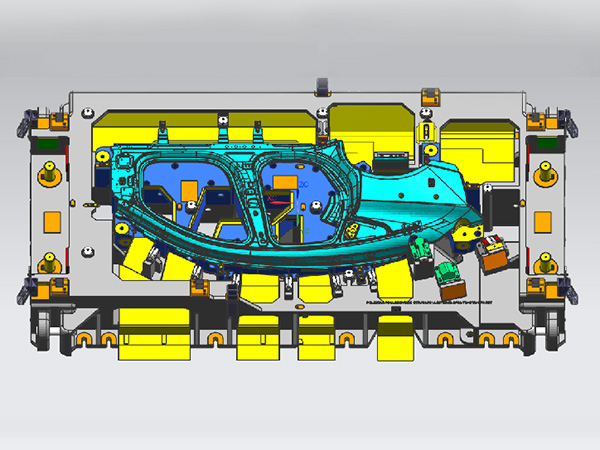
Every body side operation sequence begins with the draw. The draw die establishes material distribution, and once metal has flowed incorrectly in the draw, later operations can only trim or flange around the problem — they cannot repair it. Development therefore concentrates on the blank shape, binder force distribution, draw bead layout and addendum geometry. Simulation is used to predict thinning, splitting and wrinkling, but simulation is a guide, not a substitute for a controlled tryout on a production-intent press.
Key indicators reviewed during draw die development include minimum thickness in critical corner regions, strain margin against the forming limit curve, and the stability of material inflow measured on the blank edge. A well-developed draw leaves usable margin in all three, so that normal production variation in lubrication, coil properties and press settings does not immediately produce scrap.
Springback: prediction and compensation
Large panels formed from high strength grades carry significant residual stress, and springback after release is unavoidable. The practical answer is not to eliminate springback but to compensate for it deterministically. Modern workflows combine forming simulation with compensation loops: the simulated released shape is compared with nominal geometry, the cavity is modified in the opposite direction, and the cycle is repeated until the predicted part falls inside tolerance. Because material batches and press conditions vary, compensation is finalised with measured trial panels rather than with simulation alone.
Compensation strategy also depends on the operation sequence. Overbending in the draw, strategic use of restrike operations, and controlled flange angle correction all move the panel toward nominal without creating new surface defects. A toolmaker experienced in body side work plans these corrections from the beginning instead of adding them after problems appear.
Surface quality and defect prevention
Surface defects are the most visible failure mode on outer panels, and they often originate from small tooling details. Die radius condition, polished contact surfaces, cleanliness of the working area and the condition of draw beads all influence whether a panel shows skid lines, scoring, dents or impression marks. Prevention is a combination of design and discipline:
Generous, polished radii where cosmetic surfaces slide across tooling.
Consistent lubrication strategy verified on the production press, not only in simulation.
Wear-resistant inserts at high-pressure contact zones to keep geometry stable over long runs.
Clean handling and scrap evacuation so chips and dust cannot mark panel surfaces.
Tooling structure and production stability
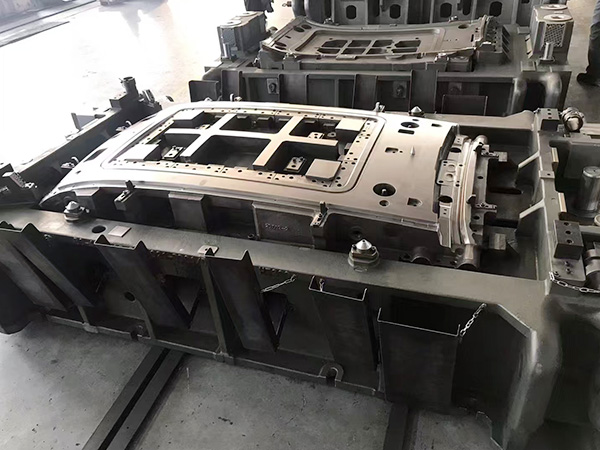
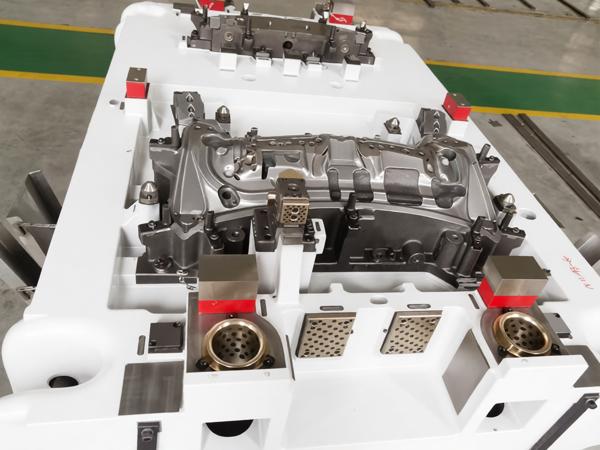
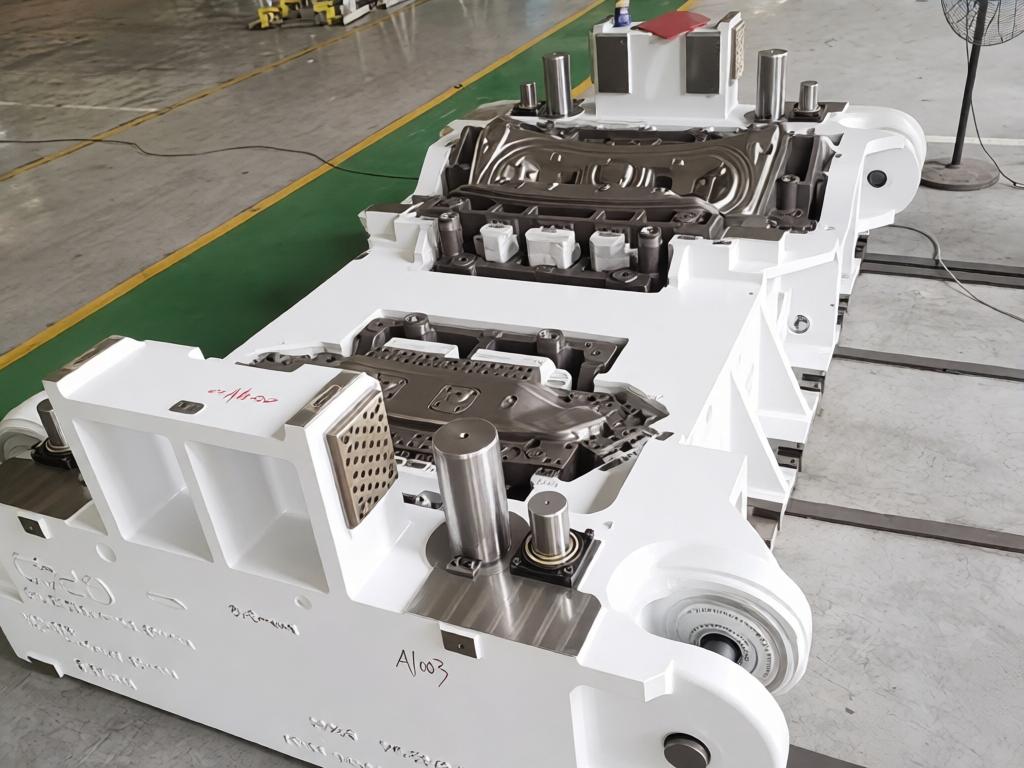
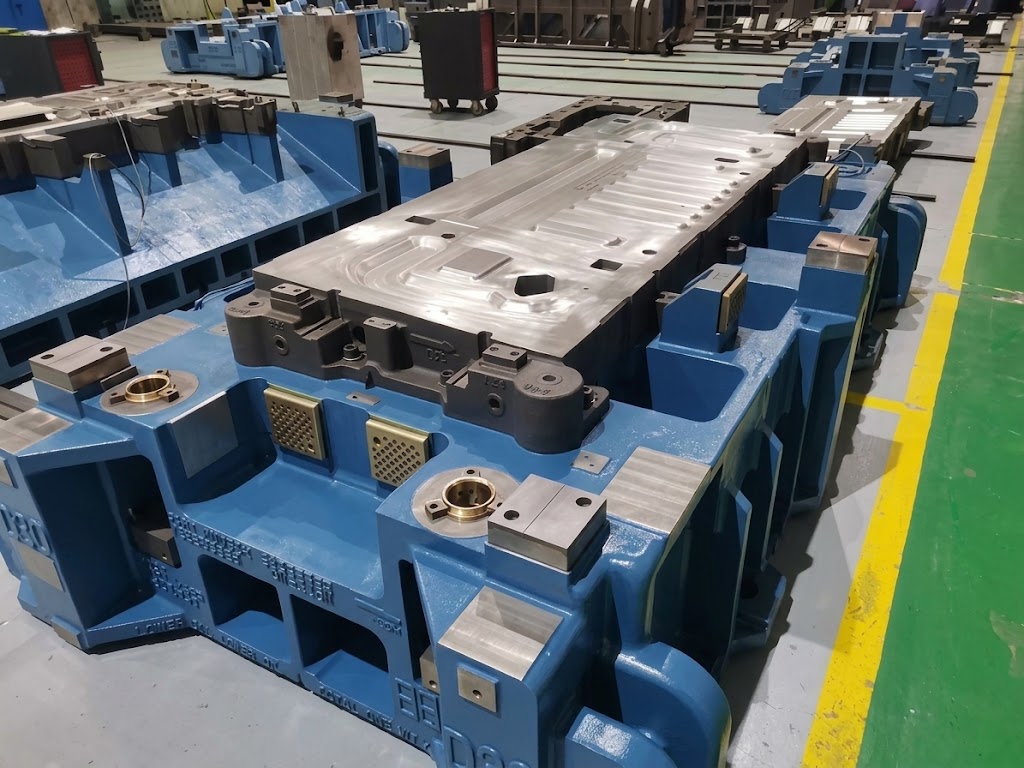
A body side die is a heavy, highly loaded structure. Cast or fabricated die bodies must resist deflection under press load, and guiding elements must keep the upper and lower tools aligned through millions of strokes. Wear plates, heel blocks and positive stops are specified so that lateral loads from flanging and cam operations are absorbed by designed surfaces rather than by cutting edges. Attention to these structural details is what separates tooling that holds tolerance for years from tooling that drifts after a few months.
Validation before release
Before a cold stamping die is released to serial production, capability is demonstrated over a real run: dimensional reports on scanned parts, surface inspection under defined lighting, and confirmation that process parameters remain inside a documented window. Trials performed on the actual production press with production-intent coil are worth far more than trials performed under idealised conditions. When these steps are respected, the tooling supports stable output, predictable maintenance intervals and a smoother start of production for the whole body shop.