

Hot Stamped Ultra High Strength Steel Components in Vehicles: Where They Sit and Why
Date: 2026-10-15 09:37:43 Author: Haoxinran Views: 161 times
Walk through any modern vehicle body and you will find ultra-high-strength steel in places that used to be mild steel with extra thickness. Hot stamped components, the parts that exit the press at 1500 MPa class strength, are no longer a niche. At Haoxinran we produce both the dies and the hot stamped structural components, and a common question from new program teams is simply where do these parts go, and why there.
Why UHSS Needs Hot Stamping
Conventional high-strength steels can be cold stamped only up to a point. Past roughly 1000 MPa the material springs back and cracks too easily to form complex shapes cold. Hot stamping solves this by shaping the part while the boron steel is soft and hot, then quenching it in the die to develop full strength. The boundary is not fixed, and material suppliers keep pushing the formable limit, but the practical line today still sits where hot stamping begins. The process is what makes the aggressive geometries of safety cages practical at all.
Key Components and Their Roles
The B-pillar is the headline part; it sits between front and rear doors and must resist side-impact intrusion while still allowing the roof to crush in a rollover in a controlled way. Roof rails and the windshield header add rollover protection. Sill members along the floor edges take rocker loads and side impacts. Front and rear bumper beams manage low-speed and crash energy. Each of these benefits from the strength-to-weight that only hot stamping delivers economically.
Material Grades in Use
Most parts start from a 22MnB5-type blank, though variations with slightly different alloying appear for specific needs. The aluminum-silicon coating applied to the blank serves double duty: it protects the surface during heating and supports corrosion resistance afterward. After quenching the part is essentially fully martensitic, which is why hardness is uniform and predictable along the section.
Joining and Assembly Notes
Hot stamped parts are hard, which complicates joining. Spot welding needs careful parameter setting because the high strength resists the needed nugget formation, and the coating matters for electrode life. Self-piercing rivets and structural adhesives are common alternatives, often used together. In the body shop the tight tolerances of these parts help locating, which is a quiet benefit that improves overall fit.
Corrosion and Coating
Because the parts see the full vehicle life outdoors, the coating applied before forming has to survive the process and keep protecting. Where the coating is scuffed during forming, touch-up or additional protection is planned. Program teams increasingly specify the corrosion strategy up front rather than discovering edge rust in validation.
Sourcing Considerations
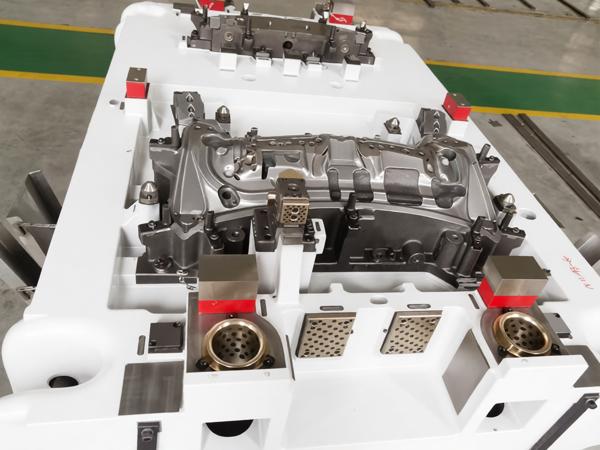
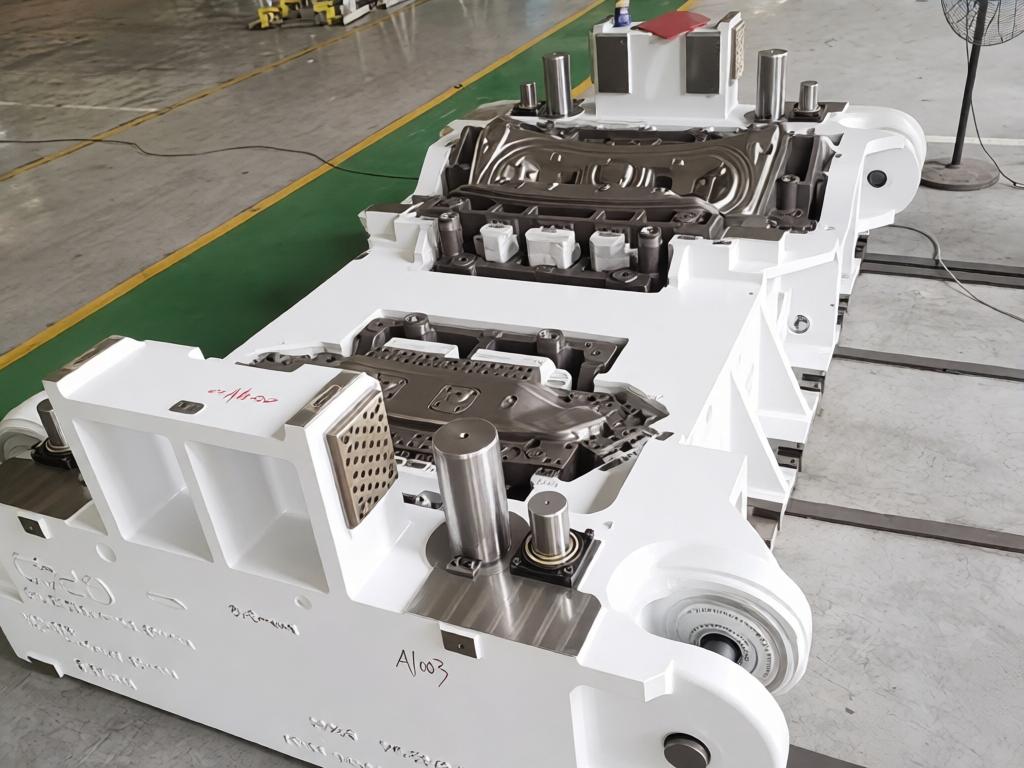
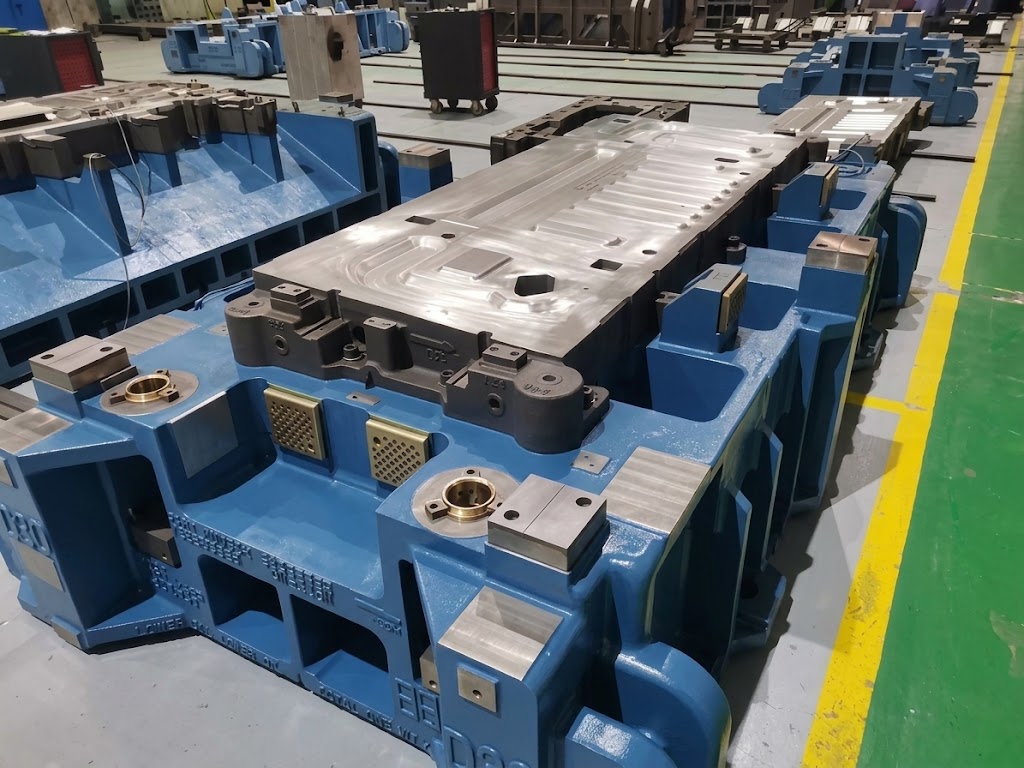
When sourcing hot stamped components, the die capability and the quenching discipline matter more than the press tonnage alone. Ask for hardness maps and dimensional capability data, not just a price per part. A supplier that can show consistent martensitic structure across a run is worth more than a cheaper quote that drifts. For Haoxinran, the link between the die we build and the parts we ship is exactly where that consistency comes from.
Quality Verification in Production
Once a program is running, verifying the parts is a routine discipline rather than a one-time check. Hardness is mapped at set points on the section to confirm the martensitic structure formed uniformly, and samples are pulled on a schedule rather than only at launch. Dimensional checks on a coordinate measuring machine track the locating points that the body shop depends on. A capable process holds both hardness and geometry within tight bands, and the data is kept so a drift can be caught before it becomes scrap. This is where the link between die design and part quality shows its real value, because a die that cannot be verified cannot be trusted at volume.
Where the Material Is Headed
The grade mix keeps evolving. Higher manganese contents and tailored coatings aim to push strength or formability further, and some programs experiment with locally heat-treated sections that blend soft and hard zones in one part. The direction is clear: more function engineered into fewer components. For specifiers, the practical takeaway is to design around the properties the process actually delivers and to keep the corrosion and joining strategy in the conversation from day one, instead of treating it as an afterthought discovered at validation.
References
WorldAutoSteel, Ultra-High-Strength Steel Components in Vehicle Bodies
SAE International, Joining of Press-Hardened Steels in Body Assembly
American Iron and Steel Institute, Coating Technologies for Hot Stamped Parts
Journal of Materials Processing Technology, Microstructure of Quenched Boron Steel