

Hot Stamping Dies for Automotive Body Structural Parts: A Practical Engineering Guide
Date: 2026-10-15 09:38:43 Author: Haoxinran Views: 174 times
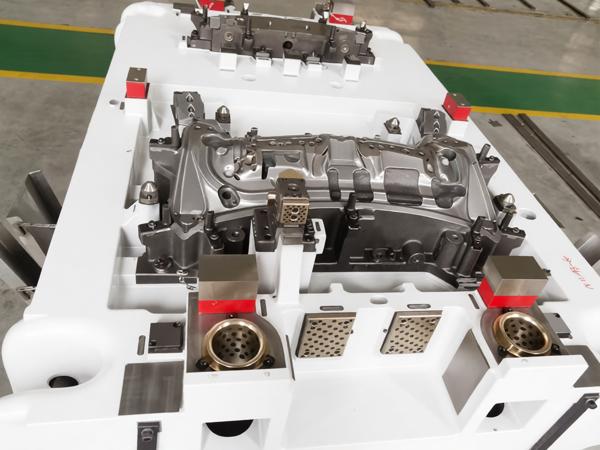
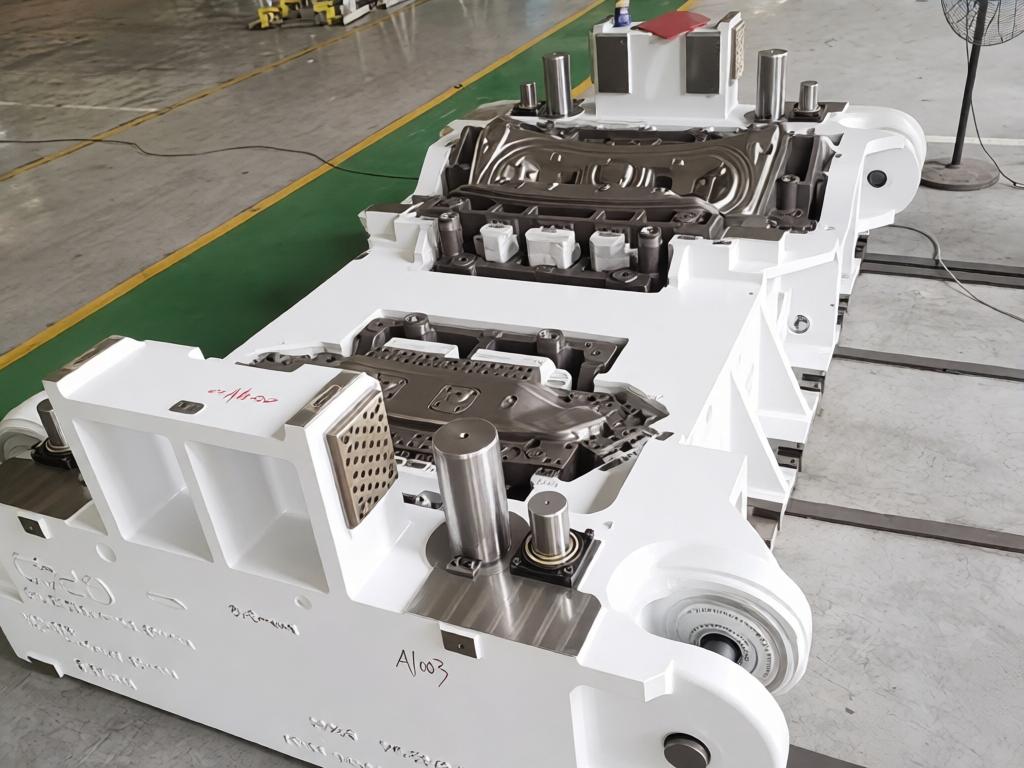
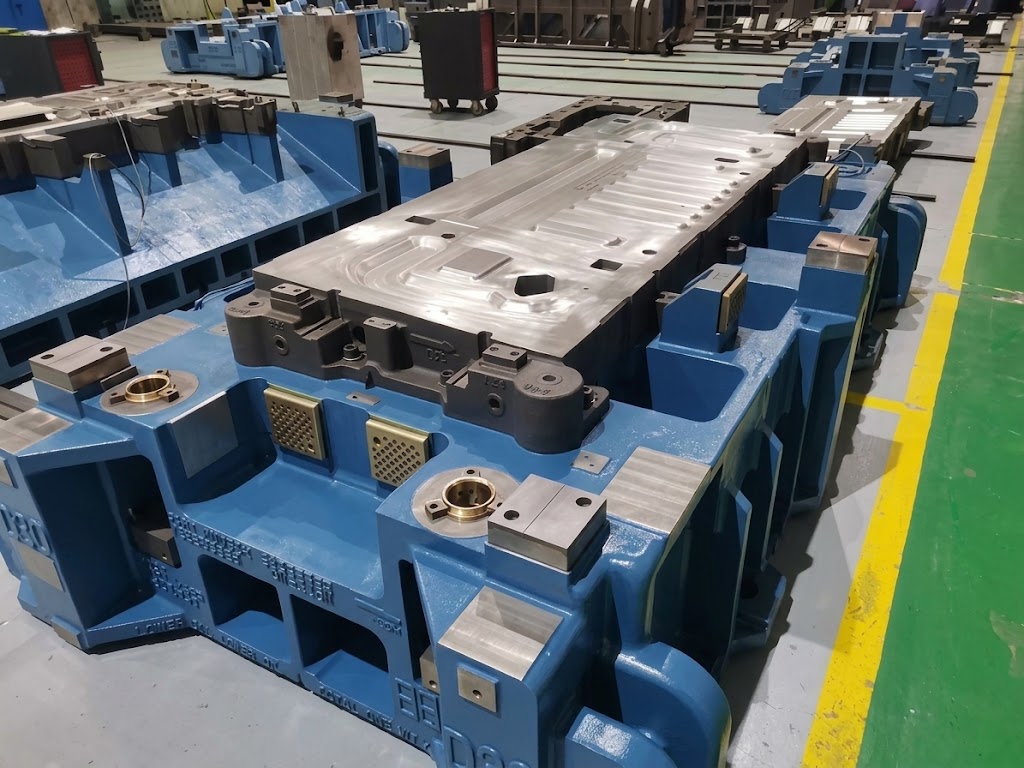
Body structural parts carry the load when a vehicle is hit, cornered, or simply driving down the road. For years, makers relied on cold-formed mild steel and then added thickness to hit safety targets. Hot stamping, sometimes called press hardening, changed the equation. At Haoxinran we build hot stamping dies for body structural parts, and the questions we hear most are less about the press and more about how the die actually controls the steel while it transforms.
Understanding Press Hardening for Structural Parts
Press hardening starts with a boron-alloyed blank, usually in the 22MnB5 family, that arrives soft enough to shape. The die heats the blank to roughly 900 to 950 degrees Celsius until austenite forms, then transfers it quickly to the tool. The tool itself is cooled from the inside. As the part is formed and held under pressure, the integrated cooling channels pull heat out fast enough to force a martensitic transformation. The result is a component with a tensile strength around 1500 MPa, roughly four to five times the strength of the starting blank, while holding a tight, repeatable geometry.
Core Design Elements of Hot Stamping Dies
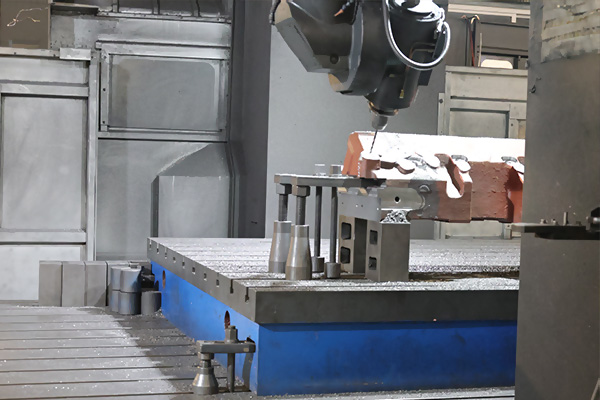
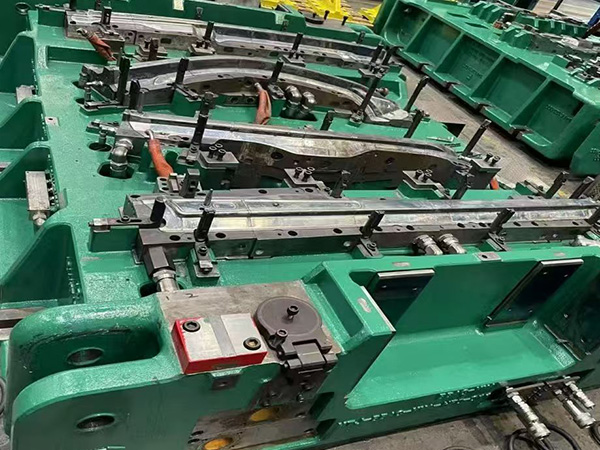
A hot stamping die is not a cold die with water pipes bolted on. The cavity, the binder, and the punch are all built as hollow shells with machined or drilled channels running close to the working surface. Spacing matters; channels set too deep slow the quench, and channels set too shallow risk cracking the tool steel. Most production tools use a hardened hot-work steel for the forming faces because they see both high temperature and high contact pressure. The parting line and the binder pressure have to be tuned so the blank does not move during the forming stroke, since any shift shows up as a dimensional error that cannot be pressed out later.
Cooling Channels and Quench Rate
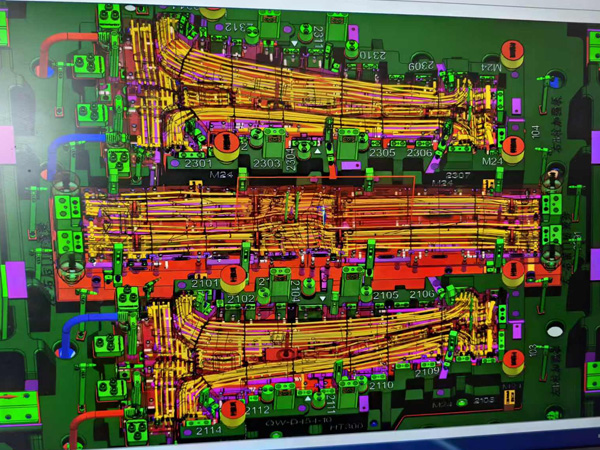
Quench rate is the single variable that decides whether you get martensite or a softer mix of bainite and ferrite. A typical target is to drop the surface below the martensite start temperature within a few seconds of contact. That means the coolant flow, the channel geometry, and the thermal mass of the tool all have to be balanced before the first part is run. We often model the cooling path during the design stage rather than discovering hot spots on the press. Where a part has thick and thin sections meeting, the thin section will harden first and can pull the geometry; local channel tuning is how that gets managed.
Material Behavior of Boron Steel
Boron steel behaves differently from the cold-rolled grades most stamping engineers grew up with. Above the transformation temperature it is highly formable, which is why complex shapes become possible at all. But the window is narrow: too slow a transfer and scale builds, too long at temperature and grain growth weakens the final part. The coating on the blank, usually an aluminum-silicon layer, protects against decarburization and later helps with corrosion resistance, so the die design has to respect that coating rather than scrape it off in the wrong place.
Common Structural Applications
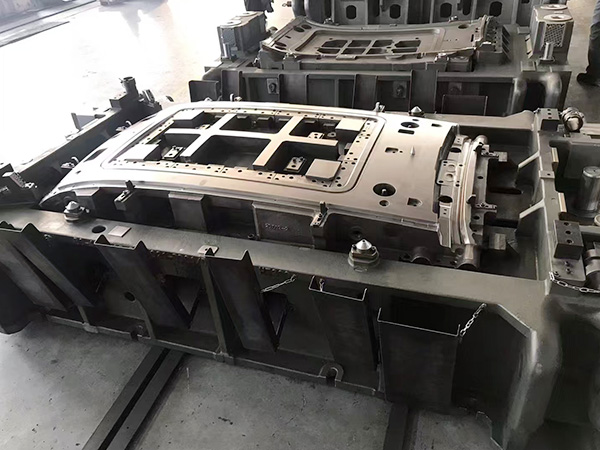
The parts that benefit most are the ones where a crash load travels through the body. B-pillars, roof rails, door intrusion beams, and front and rear bumper beams are routine hot-stamped items. Because the same die can hold very tight tolerances, these parts also locate predictably in the body shop, which quietly improves overall assembly accuracy. For electric vehicles the weight saving is even more valuable, since every kilogram removed stretches range.
Process Validation and Trial Runs
Validating a hot stamping die is its own discipline. We run the tool empty, then with probe blanks, checking temperature uniformity across the cavity before trusting the cooling design. Hardness mapping on early parts confirms the martensitic structure actually formed where the drawing predicted. Dimensional checks come next, usually on a coordinate measuring machine, because springback in hot stamping is different from cold, the part wants to stay where the die put it, but thickness variation in the blank still causes scatter. Only after hardness and geometry both pass do we move to a production ramp.
Selecting a Tooling Partner
A hot stamping die is a long-lived asset, so the relationship with the toolmaker matters as much as the first quote. Look for evidence of thermal design capability, not just machining capacity. Ask how cooling is simulated, how trial runs are documented, and what support exists when a channel clogs three months into production. The cheapest die that cannot hold quench rate will cost more in scrap than the saving was worth.
References
SAE International, Technical Paper on Press Hardening of Boron Steel Components for Automotive Structures
WorldAutoSteel, Advanced High-Strength Steel Application Guidelines for Body Structures
American Iron and Steel Institute, Steel Grades for Hot Stamping and Press Hardening
Journal of Materials Processing Technology, Martensitic Transformation Control in Hot Stamping