

Progressive Die vs Transfer Die for Automotive Stamping: Which to Choose
Date: 2026-10-25 06:40:05 Author: Haoxinran Views: 53 times
Two technologies dominate high-volume automotive stamping: the progressive die and the transfer die. Both move a part through several operations, but they do it in opposite physical styles. At Haoxinran we build both, and the choice between them shapes the die cost, the floor layout, and the part sizes you can realistically make.
Two Ways to Sequence Stamping
A progressive die carries the strip through the tool on a coil feed; each press stroke advances the metal and completes one more operation until a finished part drops at the end. A transfer die instead picks each blank up and moves it station to station, usually with a mechanical transfer system, performing one operation per station. Same goal, different material handling.
How Progressive Dies Operate
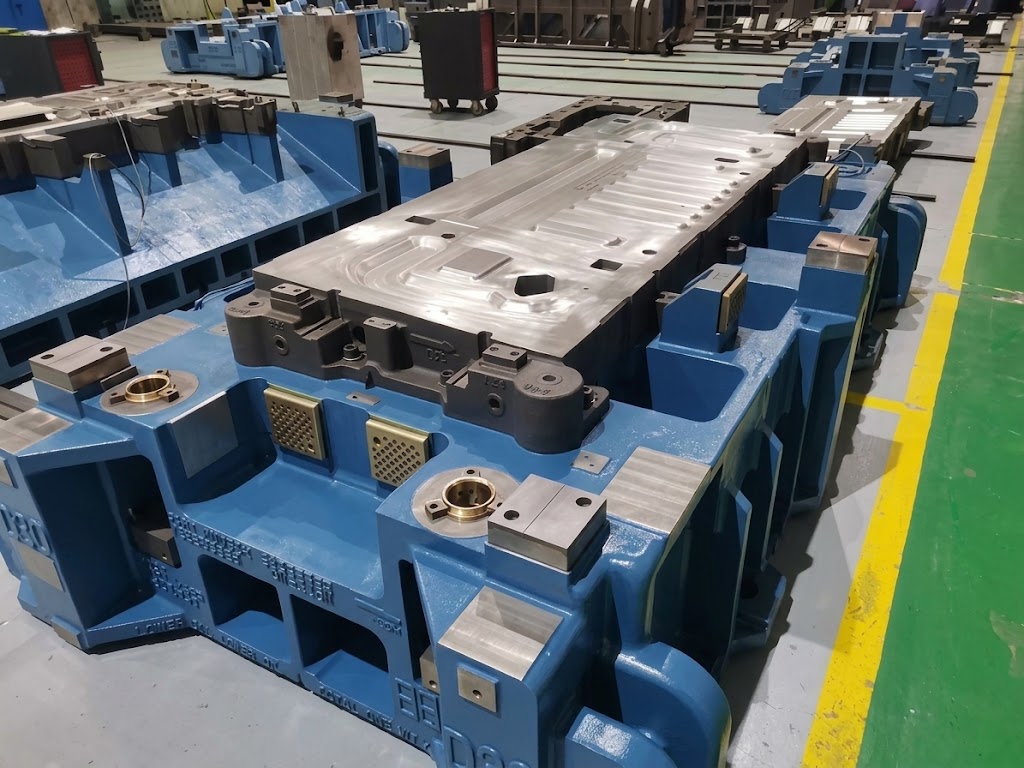
In a progressive die the part stays attached to the carrier strip until the final cutoff. Piercing, forming, and trimming happen at separate stations as the strip advances. Because everything is in one tool and one press, the footprint is small and labor is low. The strip guides the part, which keeps features aligned automatically. The limit is part size: the bigger the part, the wider the strip and the larger the press needed.
How Transfer Dies Operate
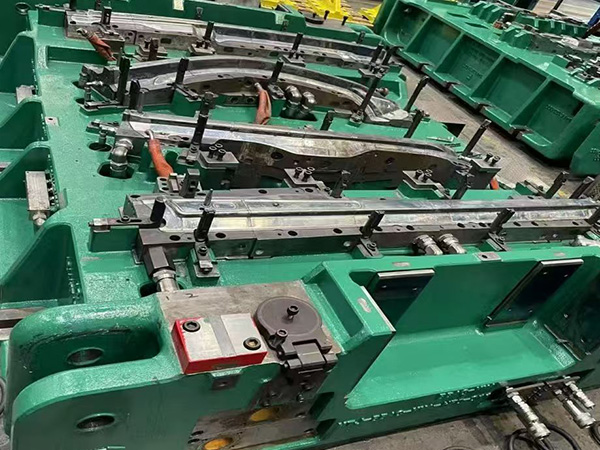
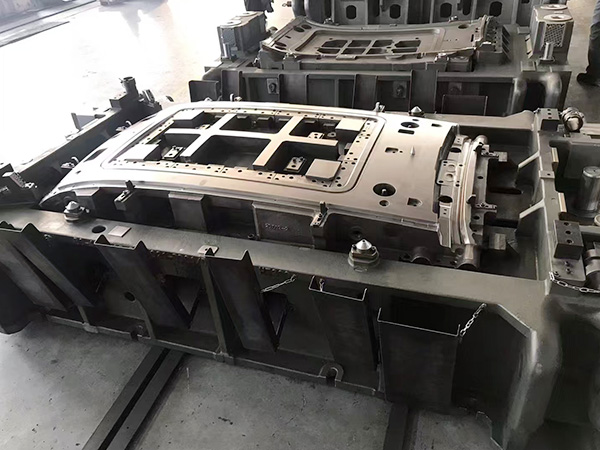
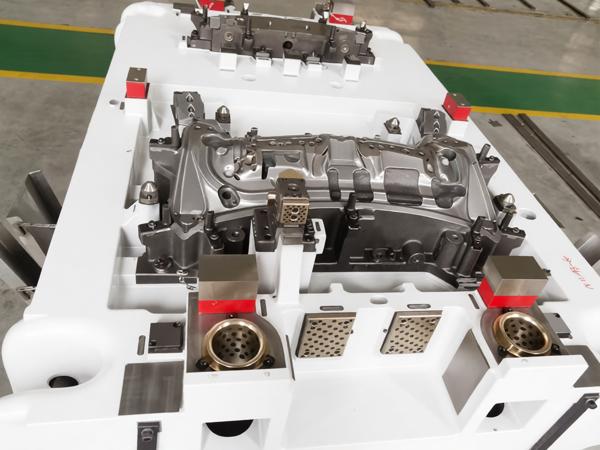
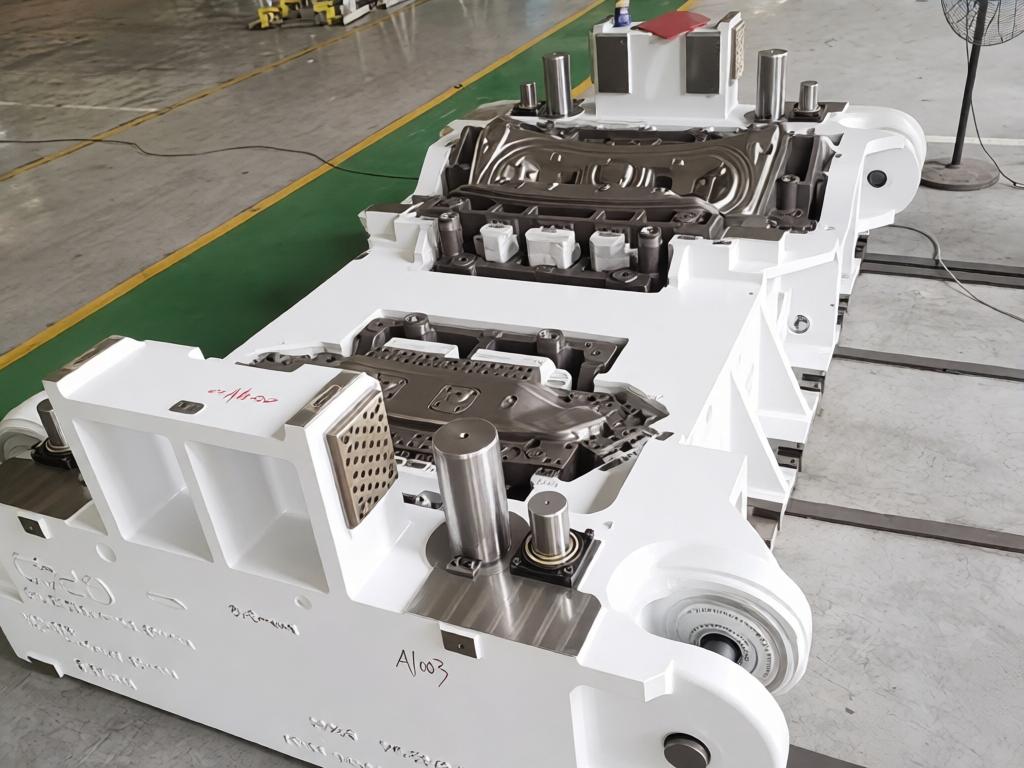
A transfer die runs as a line of stations, often in one big press or several linked presses. The blank is lifted and placed at each station, freeing the designer from strip-width limits. This suits large panels, like body side outer panels, that would be impractical on a coil. The cost is a larger footprint, more handling, and tighter synchronization between stations.
Side-by-Side Comparison
For small to medium parts in huge volume, progressive dies win on cost per part and floor space. For large or complex panels, transfer dies win on feasibility. Progressive tools cost more to build but amortize fast; transfer lines cost less per station but need more equipment and handling. Accuracy is excellent in both when set up well, though progressive dies get a consistency edge from the strip guiding the part.
Part Size and Geometry Limits
As a rule, progressive dies suit parts up to roughly a few hundred millimeters in their largest dimension. Beyond that the strip becomes unwieldy. Transfer dies take the large closures and structural panels that define a vehicle's outer shape. Geometry that needs access from the side, such as undercuts, also favors transfer with cam stations.
Volume and Cost Thresholds
Progressive dies justify their higher build cost above roughly one hundred thousand parts per year, where per-part savings accumulate. Below that, a transfer or even single-station approach may be cheaper despite higher per-part cost. The crossover depends on press time, labor rates, and how many stations the part truly needs.
Making the Call
The decision is rarely about which technology is superior and more about fit. Map the part size, the annual volume, and the available floor and press capacity, then model the total cost including downtime. Many programs end up with a mix: progressive for small brackets and reinforcements, transfer for the big visible panels. That blend is usually the efficient answer.
Synchronization and Maintenance
Transfer lines live or die by synchronization. The transfer system must place each blank within tight limits at every station, and a fault at one station stops the whole line. Progressive dies avoid that by keeping the part on the strip, but they demand precise feed control and clean material, since a misfeed damages multiple stations at once. Maintenance thinking differs too: transfer lines spread wear across stations, while a progressive die concentrates it, so its trim sections need more frequent attention. Neither is harder in principle; they simply fail in different ways, and the maintenance plan should match the technology rather than a generic habit carried over from the other.
Reading a Real Program
A small bracket made by the million fits a progressive die almost by default. A large side outer, made in lower volume with deep draws, fits a transfer line. The interesting cases sit in between, where either could work and the call comes down to floor space, available press capacity, and how the part's geometry fights the press axis. Mapping those constraints honestly, rather than defaulting to the familiar technology, is what keeps the total cost where it should be, and it prevents the common mistake of buying capacity you never use or starving a program that needed more.
References
Precision Metalforming Association, Progressive and Transfer Die Design Manual
SAE International, High-Volume Stamping Line Configuration
Journal of Manufacturing Processes, Cost Modeling of Progressive Versus Transfer Stamping
International Organization for Standardization, ISO 9001 Quality Management in Tooling