

- Site Navigation -

Automotive Cold Stamping Dies Manufacturing Process: From Blank to Tryout
Date: 2026-10-15 09:34:39 Author: Haoxinran Views: 54 times
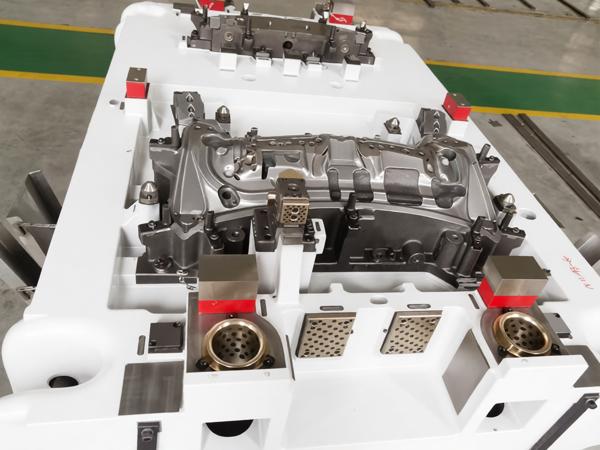
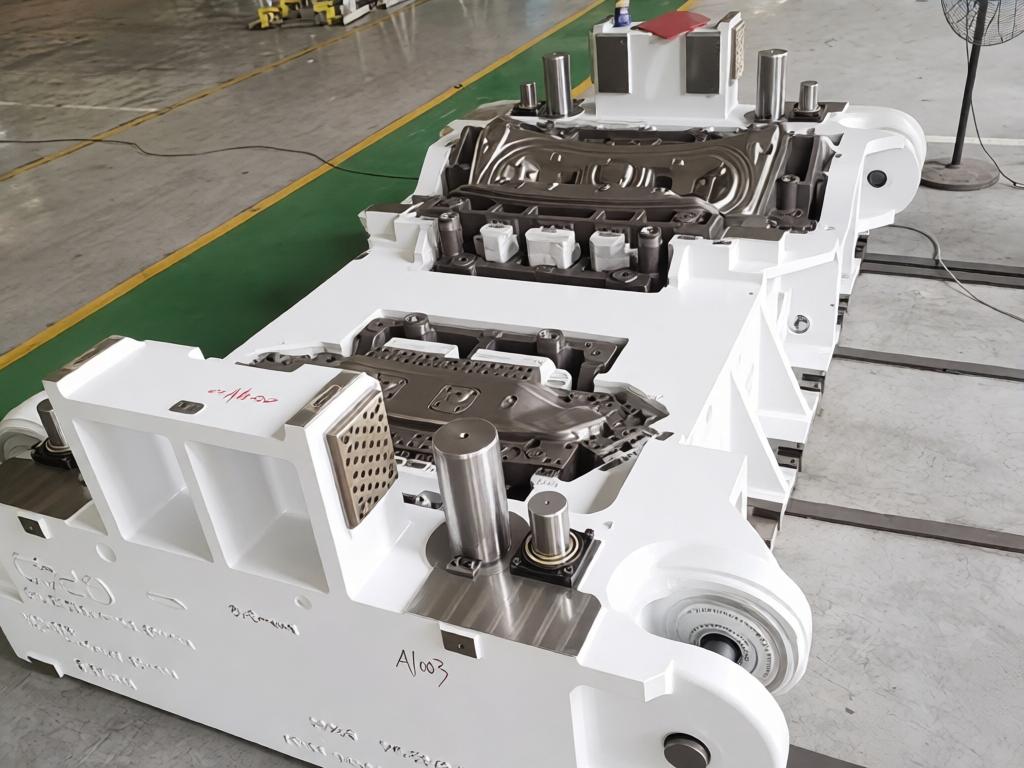
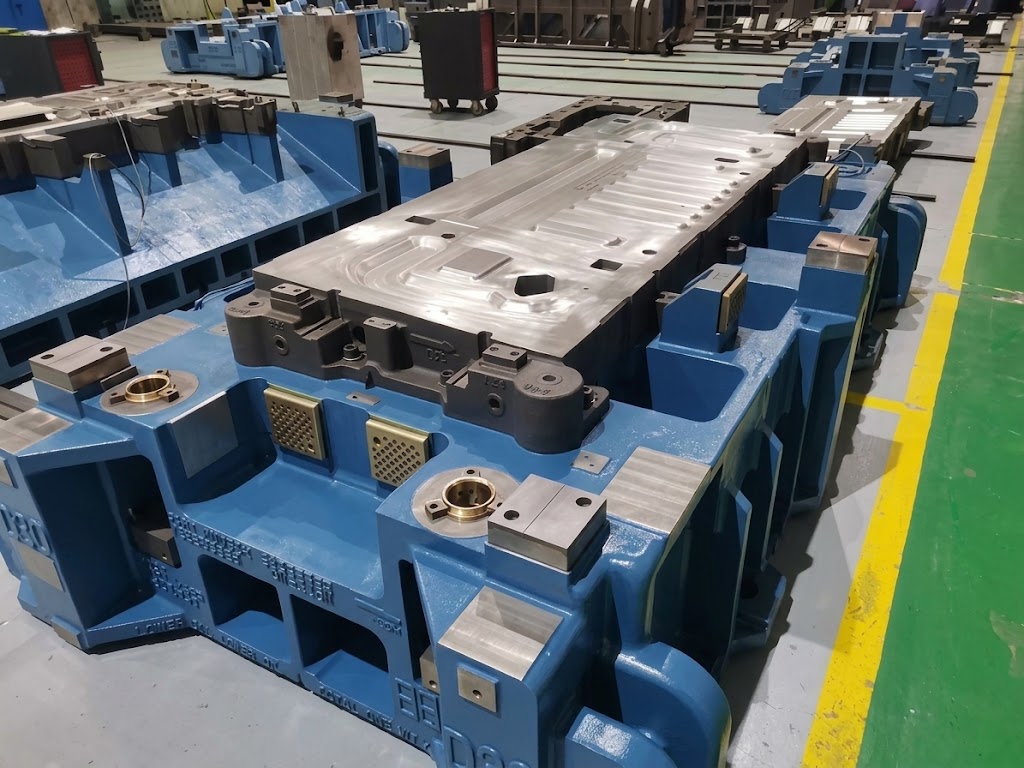
Cold stamping is the quiet workhorse of automotive body making. While hot stamping grabs attention for ultra-high-strength parts, the bulk of a vehicle's stamped panels, floors, closures, brackets, and reinforcements, are still made cold, at room temperature, in dies that may run millions of hits. At Haoxinran our cold stamping die work spans body side series and a wide range of structural and closure panels, and the manufacturing process behind a reliable die is far more than cutting steel to a shape.
What Cold Stamping Dies Actually Do
A cold stamping die converts a flat coil of sheet metal into a finished or semi-finished part through a sequence of operations: shearing the blank, drawing it into shape, bending flanges, piercing holes, and trimming excess. Each operation happens in a station, and the die has to control material flow at every one. Unlike hot forming, there is no softened steel to help; the metal work-hardens as it is formed, so the die must be stiff, well-guided, and precisely toleranced or the parts drift out of spec within thousands of cycles.
Typical Process Sequence
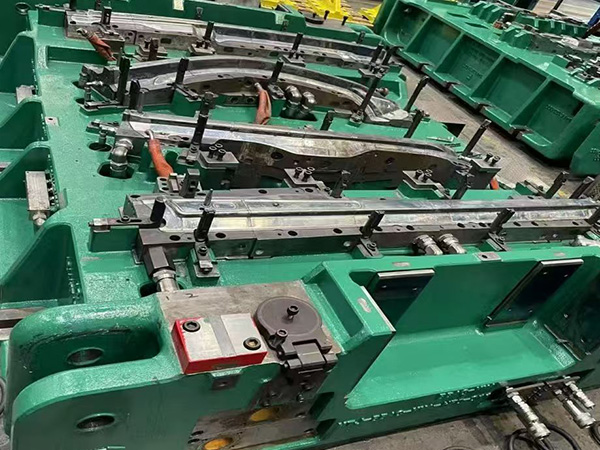
Most body panels move through a linked sequence rather than a single hit. A draw die forms the basic shape and sets the surface; a trim die cuts the outline; a flange or cam die bends edges that the straight press motion cannot reach; pierce dies add holes and slots. For high-volume runs these stations may be combined into a progressive die, or kept separate on transfer presses. The choice depends on part size, volume, and how much the geometry fights the press axis.
Die Material and Hardness
The forming and cutting faces see constant impact and abrasion, so die steel selection drives both life and cost. High-carbon high-chromium grades are common for trim and punch sections because they hold an edge; the draw surfaces often use a tougher grade to resist chipping. Hardness is a balance: too hard and the insert cracks on a shock load, too soft and it wears in days. Heat treatment and subsequent stress relieving are where many shops cut corners, and it shows up later as premature failure.
Precision Machining Workflow
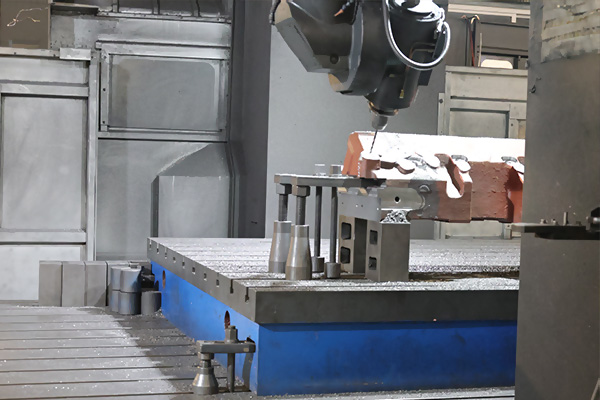
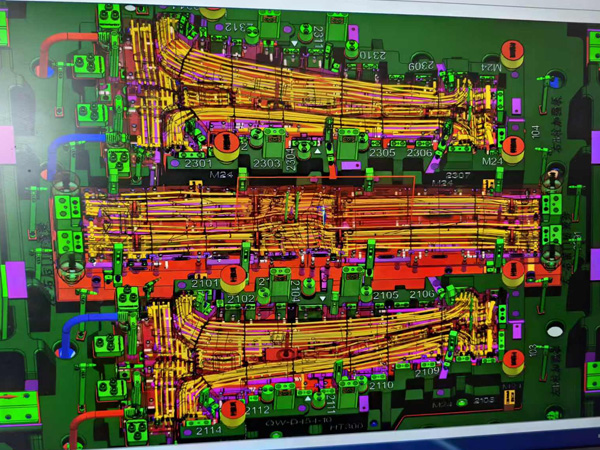
A modern die is machined on CNC centers to tight tolerances, then hand-finished by die makers who tune the radii and blending surfaces that no machine can fully resolve. The guide posts, bushings, and heel blocks set the repeatability; if the upper shoe shifts a few hundredths of a millimeter, the panel shows it. We treat the machined reference datums as sacred, because every downstream operation keys off them.
Springback and Tolerances
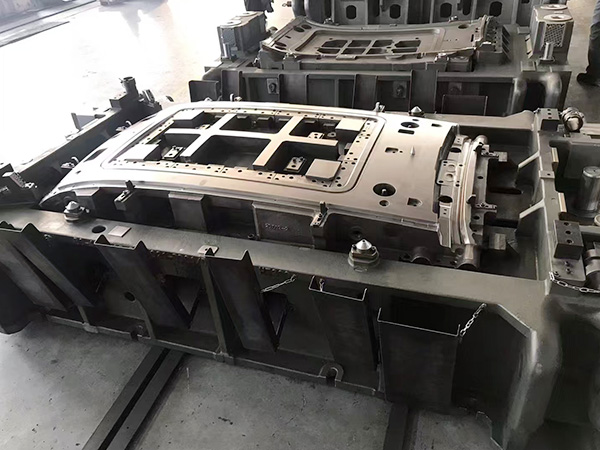
Cold-formed steel springs back after the load leaves. The amount depends on the grade, the wall angle, and the draw depth. Die makers compensate by over-bending or by building in a small counter-curvature, then confirming on trial parts. For closure panels the visible surface also has class-A requirements, so the die has to deliver shape and finish at once, a harder problem than making a hidden bracket.
Tryout and Correction
Tryout is where the die proves itself. A few hundred hits on the bench press reveal where the steel wrinkles, where it splits, and where it springs back too far. Correction is iterative: adjusting binder pressure, adding draw beads, polishing a radius. A die that ships without a real tryout almost always fails on the customer's floor, and the cost of fixing it there is far higher than fixing it in the tool room.
When Cold Stamping Fits Best
Cold stamping remains the default for anything made from mild or conventional high-strength steel in medium to high volume. It is fast, repeatable, and economical once the tool is right. It yields the spotlight to hot stamping only where strength-to-weight demands push past what cold-formed steel can deliver. Knowing that boundary, and designing the die accordingly, is most of the battle.
Cost Drivers and Lead Time
A cold stamping die's price is driven less by its size than by its complexity and the steel grade it demands. A simple trim and pierce tool for a bracket costs a fraction of a body side draw die with cam stations and hand-blended surfaces. Lead time follows the same rule: a single-operation tool may be cut and tried in weeks, while a multi-station panel die can take months once design, machining, heat treatment, and tryout are counted. We schedule around tryout rather than machining, because that phase, not the cutting, usually fixes the delivery date. Customers who release the math data and blank specification early save more time than those who chase a faster quote, since most delays trace back to late or changing inputs rather than the shop floor.
References
Precision Metalforming Association, Cold Stamping Process Handbook for Sheet Metal
SAE International, Springback Compensation in Automotive Panel Dies
Journal of Manufacturing Processes, Tool Steel Selection for High-Volume Stamping
International Organization for Standardization, ISO 9001 Quality Management in Tooling

Contact Us
- Company Name: Hebei Haoxinran Machinery Manufacturing Co.,Ltd.
- Hotline: +86 18932785670
- Email: project@haoranmj.com
- Website: https://www.hxrmetals.com
- Address: Across from Sanjing Distillery on Road 4, Botou Economic Development Zone, Cangzhou City, Hebei Province


Copyright © 2026-2027 https://www.hxrmetals.com. All Rights Reserved. Hebei Haoxinran Machinery Manufacturing Co.,Ltd.